SQL Server Seek vs Scan: Why a Flat Read Count Lies
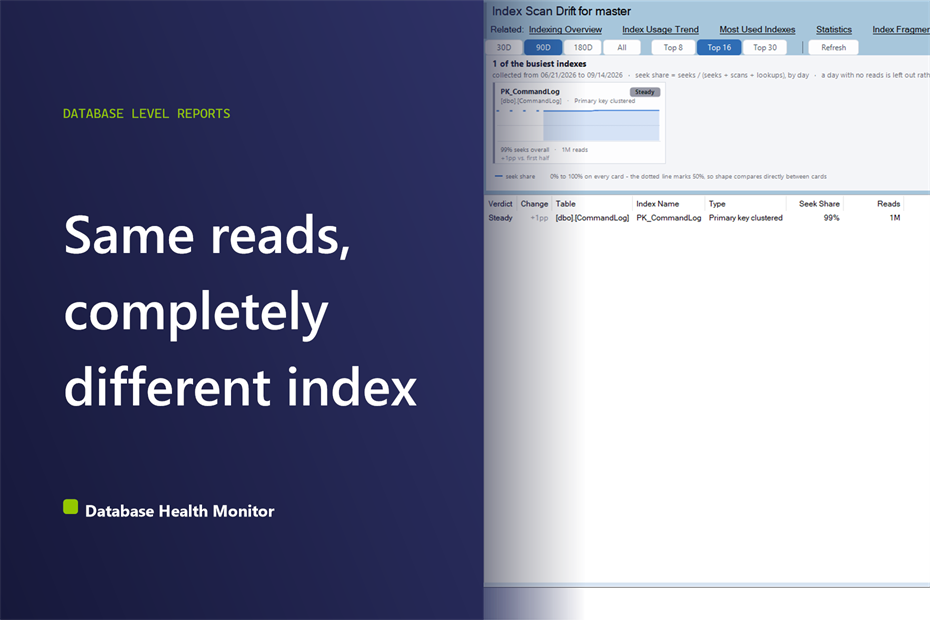
A flat read count can hide an index sliding from seeks to scans. Here is how the SQL Server seek vs scan ratio exposes it before queries slow down.
A flat read count can hide an index sliding from seeks to scans. Here is how the SQL Server seek vs scan ratio exposes it before queries slow down.

When a query filters a large table on a range, like a date window, and no index supports that range, SQL Server scans the table. Put that scan inside a subquery that gets joined to other inputs, and a query that should take seconds can run for hours. In a recent case, one covering index took a query from almost two hours in the worst case down to about four seconds. What is an unindexed range predicate? A range predicate …
We are ready to help. Steve and the team at Stedman Solutions are here to help with your SQL Server needs. Get help today by contacting Stedman Solutions through the free 30 minute consultation form.
Contact Info for
Stedman Solutions, LLC.
PO Box 3175, Ferndale WA 98248,
Phone: (360)610-7833
Our Privacy Policy